
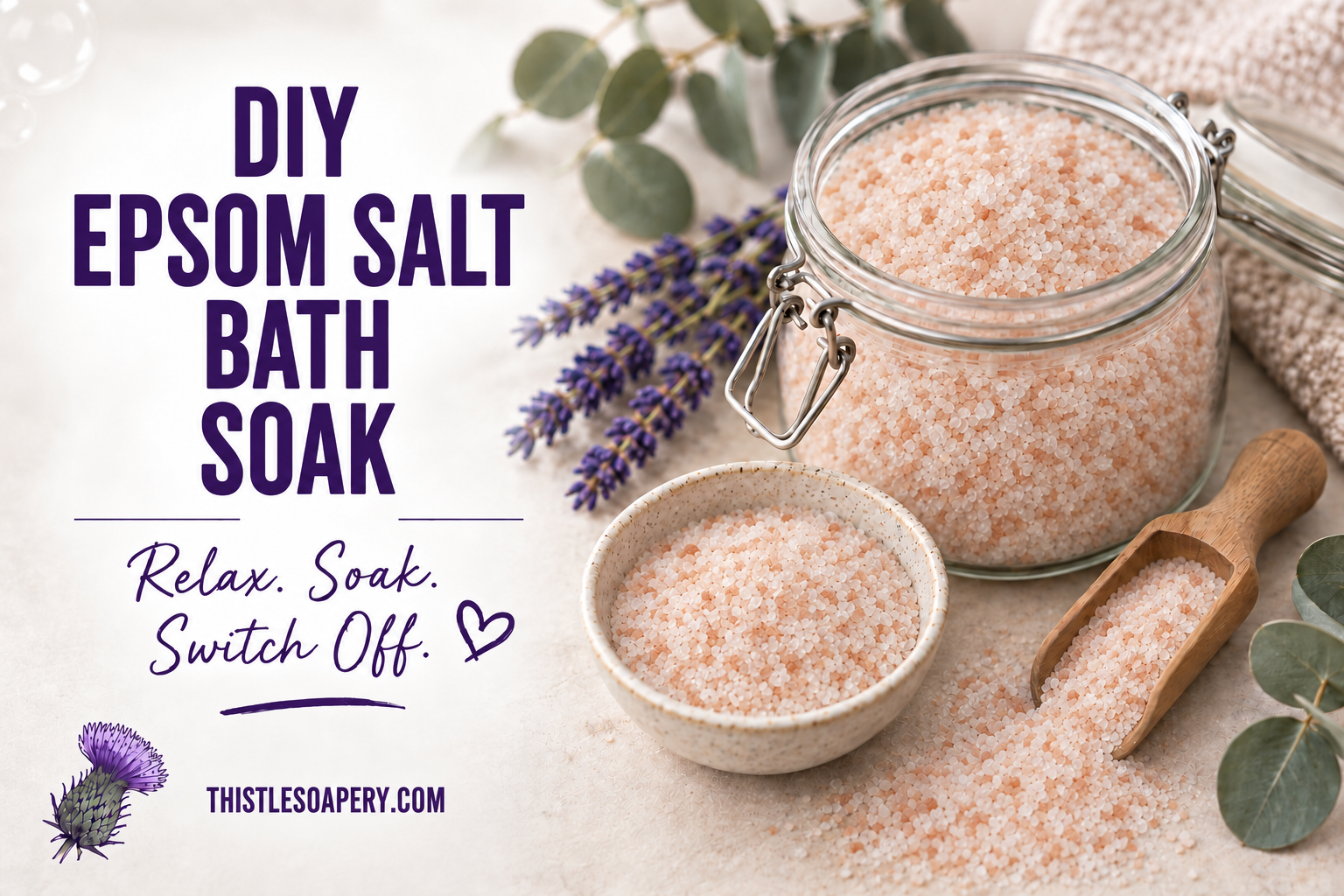
There is something wonderfully restorative about closing the bathroom door, putting your phone to one side and sinking into a warm bath. Add a handful of bath salts and suddenly the bathroom feels a little more like a spa, just without the fluffy robe, tiny slippers or eye-watering treatment bill.
Baths are my go-to form of relaxation. When my menopause-related joint aches are making themselves known, or I am struggling to switch off and get the rest I need, a long salt soak is one of the first things I reach for. And when I say “long”, I do mean long—an hour can disappear remarkably quickly once I am in there. Sometimes a glass of wine mysteriously finds its way into the bathroom too. Honestly, I think I would be a wreck without my baths; that little pocket of warmth, quiet and nobody asking me for anything makes an enormous difference to how I feel.
Epsom salts come with enough impressive-sounding claims to make them seem like tiny white miracle workers. So, what can they genuinely do and how can you turn them into a beautifully scented bath soak without needing a chemistry degree? Here is our simple guide.
What are Epsom salts?
Despite their name, Epsom salts are not the same as table salt. They are crystals of magnesium sulphate, named after the Surrey town of Epsom, where the mineral was historically found in spring water.
They dissolve easily in warm water and have long been used in baths and foot soaks. Many people say an Epsom salt bath helps tired muscles feel more comfortable and leaves them feeling calmer after a busy day which is already a perfectly respectable achievement for a bag of crystals.
What are the benefits of an Epsom salt bath?
A reason to slow down
Sometimes the ritual is the benefit. Running a bath creates a deliberate pause in the day: warm water, fewer distractions and 15 or 20 minutes in which there is nothing you need to do. Or, in my case, closer to an hour while everyone else wonders whether I have taken up permanent residence in the bathroom. The NHS includes taking a bath among the calming activities that can form part of a relaxing bedtime routine.
A comforting soak for a tired body
Warm water can feel soothing after a long day, a workout or hours spent on your feet. When my joints are feeling particularly creaky, lowering myself into a warm salt bath feels like a genuine treat. I cannot promise the salts are performing miracles behind the scenes, but the warmth, the quiet and the chance to stop moving for a while are very welcome indeed.
A simple bedtime ritual
A warm—not volcanically hot—bath before bed may help you feel relaxed and ready to wind down. Add low lighting, a favourite book or some quiet music and it becomes an easy, screen-free evening ritual. The only real challenge is eventually persuading yourself to get out.
Does an Epsom salt bath really top up your magnesium?
You will often see claims that magnesium from Epsom salts is absorbed through the skin, “detoxes” the body or corrects a magnesium deficiency. It would be lovely if sitting in the bath for an hour fixed absolutely everything, but the evidence has not quite caught up with the marketing. At present, there is not strong evidence that soaking in Epsom salts meaningfully raises the body’s magnesium levels through healthy skin.
That certainly does not make the bath pointless. A warm soak can still feel comforting and relaxing; it is simply better to enjoy it as a self-care ritual rather than expect it to do the work of a medical professional. If you are concerned about magnesium deficiency, muscle pain, sleep problems or other persistent symptoms, speak to someone suitably qualified rather than asking your bath salts to diagnose you.
A simple DIY Epsom salt bath soak
This recipe makes approximately 500g—enough for four or five generously salted baths, depending on how enthusiastic you are with the scoop.
You will need
- 350g Epsom salts
- 150g fine pink Himalayan salt
- A clean, completely dry mixing bowl
- An airtight jar with a lid
Method
- Weigh both salts into the bowl.
- Mix thoroughly, breaking up any small clumps.
- Spoon the mixture into a clean, dry jar and close it tightly.
- Add 100–125g to a comfortably warm bath and stir the water until the salts dissolve.
- Soak for around 15–20 minutes, then step out carefully.
The pink Himalayan salt gives the mixture a naturally pretty blush colour, so there is no need to add mica or bath colour—or spend the following morning scrubbing a sparkly pink ring from the bath. Keeping the recipe fragrance-free also makes it the gentlest option for anyone with sensitive skin.
Want to add a spa-like fragrance?
Essential oils need a little more care. They do not dissolve in water, and mixing them into dry Epsom salts does not make them water-soluble. Once the salt dissolves, undiluted droplets of essential oil can float on the surface and come into direct contact with the skin.
If you are experienced in making bath products and have an accurate scale, you can make the scented version below using Polysorbate 80 to disperse the essential oils more evenly.
What exactly is Polysorbate 80—and what does it do?
Polysorbate 80 may sound like a friendly robot from a science-fiction film, but it is actually a non-ionic surfactant commonly used in cosmetics. In plain English, it acts as a peacekeeper between oil and water—two ingredients that would otherwise rather keep to themselves.
In this recipe, it helps break the essential oils into much smaller droplets and disperse them more evenly through the bathwater. Without it, the salts will dissolve but the essential oils will not; they can float on the surface in concentrated droplets, ready to make direct contact with your skin. Polysorbate 80 also helps reduce the oily film that can otherwise cling to the bath.
It is not a preservative and it does not make unlimited amounts of essential oil safe, so the measurements still matter. It simply helps the small, carefully measured amount in this recipe behave itself once it reaches the water—which is more than can be said for me after an hour in the bath and a glass of wine.
Lavender and bergamot spa soak
- 350g Epsom salts
- 142.5g fine pink Himalayan salt
- 6g Polysorbate 80
- 0.9g lavender essential oil
- 0.45g bergamot FCF essential oil
- 0.15g eucalyptus essential oil
Mix the three essential oils into the Polysorbate 80 until completely combined. Gradually stir this liquid into the salts, mixing until evenly distributed, then transfer to an airtight jar.
Lavender gives the blend its soft floral heart, bergamot adds an elegant citrus note and the tiny touch of eucalyptus creates that clean, steam-room freshness. It is about as close as I can get to a posh spa at home without somebody appearing to hand me a robe. Make sure the bergamot is labelled FCF or bergapten-free; otherwise, replace it with sweet orange essential oil.
If you do not have Polysorbate 80 and a scale capable of weighing very small quantities accurately, stick with the fragrance-free recipe. Please do not estimate essential oils by eye or drip them straight into the bath.
Before you disappear into the bathroom
- Use comfortably warm rather than very hot water, particularly if you are prone to hot flushes, dizziness or sensitive skin.
- Do not use bath salts on broken, freshly shaved or irritated skin.
- Take care getting in and out of the bath, especially if you have added oils.
- Stop using the soak if it causes stinging, itching or irritation.
- Keep the jar tightly closed and always use dry hands or a dry spoon.
- Keep bath salts away from children and pets, and never eat them.
- If you are pregnant, receiving medical treatment or managing a health condition, check with an appropriate healthcare professional before using essential oils.
Make the ritual your own
A bath does not need to promise miracles to be worthwhile. Sometimes a warm soak, a calming fragrance and twenty quiet minutes are enough. Sometimes it becomes an hour, your book gets slightly damp and a glass of wine makes an appearance. I am not here to judge.
Dim the lights, choose some music, pour yourself something nice and let the rest of the evening wait. Your homemade bath salts also make a thoughtful gift—just add a label with the ingredients, directions and safety advice. Whether you share them or quietly keep the whole jar for yourself is entirely your decision.
Handmade in London with a Scottish heart.
If making your own bath salts sound like a chore and you want something easy to elevate your bathtime ritual why not try out one of our foaming bath bombs: Thistle Soapery Bath Bombs


